Search Artz of Culturez

Monday, March 30, 2026

Shattered Glass: What a Dream Revealed About Moving On

(Shattered Glass - by Tamika Cody)


I had a dream about my ex-husband. And I woke up irritated. In real life, that chapter is closed and has been for nearly 20 years. Not loosely. Not emotionally. I closed that part of my life with intention. 


In the dream, I was in an art gallery. Quiet. Thoughtful. The kind of space where everything has a place. And for me, wherever art resides is my safe space. There was a thrift store tucked inside the art gallery, and I was searching through small objects. Tiny little knick-knacks that felt like a reflection of my eclectic personality. Pieces I could bring home. Pieces that felt like me.

I was building something. And then he appeared. Not in a way that made sense, or in a way that he was welcomed. But he was present. Nonchalant. As if he still believed he had access.

He tried to speak to me casually. He asked me about my favorite restaurants. Familiar territory. As if time had erased everything that happened. But it hadn’t. I told him I could give him a list. But I wasn't going anywhere with him. And I meant it.

I moved away from him to put on my coat as I prepared to leave. He followed me and offered to help, asking if I was trying to leave without him. I rejected his help. I told him my goal was to get away from him as quickly as possible. I left without purchasing a thing. And as I walked out of that thrift store art gallery space, the dream ended.

When I woke up, I realized the dream wasn't about him. It was about what I’ve built since I closed that chapter of my life.

During the pandemic, I painted a piece called Shattered Glass. I dedicated it to my adult children. To the ones who had to carry the weight of someone else’s betrayal. To the ones who deserved safety, honesty, and protection without exception.
That piece came from a place I don’t revisit often. But it exists as proof that something can break and still be seen, held, and honored without pretending it wasn’t shattered in the first place.

The dream showed me something simple and undeniable. There are parts of life you don’t restore. You don’t repurpose them. You don’t invite them back in under new terms. You leave them where they belong. And then you build something else. Piece by piece. With care. With intention. Not for the past, but for the life that’s yours now. For the people who are safe within it. And for the version of you who no longer needs to look back to know she made the right decision, even when the past shows up uninvited.

Sunday, March 8, 2026

What Happens When Artists Are Paid to Create? Ireland Tried It.

(VP Kamala Harris: Art by Tamika Cody)
While scrolling TikTok recently, I came across a video that stopped me mid-swipe. I downloaded it and immediately knew it was worth writing about.

An artist was explaining something I had never heard of before. Ireland has a program that pays artists a weekly stipend just to create art. No deadlines. No quotas. No “prove this will make money." Just space to create.

The initiative is called the Basic Income for the Arts, a program launched by the Government of Ireland in 2022. Under it, selected artists receive about €325 per week to support their creative practice.

The idea is simple and radical in a world where many artists juggle multiple jobs just to pay the bills.

What if artists had financial flexibility to make more art?

Ireland first tested the idea through a pilot program. The results were strong enough that the government decided to make the Basic Income for the Arts permanent in 2026.

Artsy U.S. cities such as San Francisco and New York have tested similar programs. But Ireland's Culture Minister Patrick O'Donovan said the country's initiative is the first permanent one of its kind in the world, according to Reuters.

A TikTok That Sparked a Bigger Idea

The video that caught my attention was posted by Azriél Patricia Crews, an artist and entrepreneur, and the daughter of actor Terry Crews.

In the clip, she talks about how Ireland's program inspired a new idea she's working on.


Crews is in the midst of building a platform called SEELAH™
, which she describes as a profit-sharing ecosystem for artists.

Her goal is straightforward. End the long-running narrative of the "starving artist."

Instead of creators competing for scraps of exposure or chasing algorithms, the platform aims to allow artists to share in revenue generated within the ecosystem.

She calls it a "no more starving artists initiative."

Why This Conversation Matters

Artists have always helped shape culture, but the reality of being an artist has rarely been economically stable.

Musicians, painters, performers, and writers often create their most important work while holding down other jobs.

Researchers studying Ireland's program are looking at whether guaranteed income allows artists to create more work, remain in their fields longer, and experience less financial stress.

At the same time, entrepreneurs like Crews are exploring whether technology might offer another path forward.

Instead of relying on government support, digital platforms could create shared revenue models that allow artists to earn collectively.

Two Different Paths, One Big Question

Ireland's Basic Income for the Arts represents one approach through public policy. Platforms like Seelah represent another way through innovation.

Both are trying to answer the same question. How do we build a world where artists can create without constantly worrying about survival?

For anyone who believes art shapes culture, that question is worth paying attention to.


Saturday, March 7, 2026

Marcellous Lovelace: The Artist Behind the Album Cover of Jill Scott’s “To Whom This May Concern”

A closer look at the artist whose work caught my eye.


(Front cover of Jill Scott’s album To Whom This May Concern,
featuring artwork by Marcellous Lovelace. Photo by Tamika Cody.)


When my daughter surprised me with To Whom This May Concern on vinyl by Jill Scott, I was over the moon. For those of you who don’t know, Jill and I go way back. Her first album, Who Is Jill Scott? Words and Sounds Vol. 1 got me through an emotional divorce. Every album and collaboration since has taught me lessons about life, love, and what it means to be a grown-ass woman.


To Whom This May Concern landed in my lap on Feb. 13, 2026. Yes, my daughter thought ahead and made sure it arrived on the official release date. When I pulled the album out of its shipping box, the cover immediately caught my attention. The artwork is by Chicago artist Marcellous Lovelace, whose name appears in the lower right corner of the cover.


“This is what I miss about holding music in my hands,” I said to my daughter. “The artwork.”


In the digital age of music streaming services, with platforms like iTunes, Spotify, Tidal, and SoundCloud, people often miss out on that extra layer of a musician's creativity. The artwork that accompanies full albums tells a story.


(Back cover of Jill Scott’s album To Whom This May Concern. Photo by Tamika Cody.)

Curious about the artist, I wanted to learn more about Lovelace. During one of the podcasts Scott appeared on while promoting the album, I learned she discovered his work on Instagram. She slid into his DMs, and the rest is history. The piece she chose from Lovelace’s collection is titled "SHE IS BRAVE AND FREE.”


Who is Marcellous Lovelace?


Lovelace was born in Chicago and attended the School of the Art Institute of Chicago.


His Instagram bio reads: “Art of Marcellous Lovelace created to teach self-love and awareness of original people never conforming to Colonialism.”


On the Saatchi Art website, Lovelace explains that his work is rooted in “escaping the worst situation possible.” A few clicks later led me to his personal website, where he describes himself as an “Afro Urban Indigenous Folk Artist (AFRICAN BLACKNESS LIBERATION).”


Lovelace paints in mixed media using found materials. His work draws heavily from personal experience, including growing up in Roseland on Chicago's South Side and witnessing life in economically marginalized communities across America.


“This segregated, poverty-stricken environment helped me to develop over 400 images a year over the last 30 years of my life,” he shared. “My environment is so negative it helps me to create beauty from this struggle. I paint because it’s the only thing that feels good after feeling like I’m trapped in a world that has no hope.”


He uses everything from old pieces of paper to garbage cans, tires, mattresses, and construction debris from torn-down buildings.


The tragedies that occurred in the city where he was raised helped him reinterpret oppression across a wide range of surfaces. His work also aligns with long-standing African artistic traditions where material carries spirit, history, and function.


“My surfaces absorb the trauma, endurance, and lived reality of Black life in America,” he writes in his bio.


His work is inspired by African American artists such as Thornton Dial, Lonnie Holley, Elizabeth Catlett, Noah Purifoy, and Betye Saar, who used discarded materials as historical evidence against erasure, poverty, and racial violence.


Such an inspiring artist. And knowing the story behind the artwork makes Jill Scott’s To Whom This May Concern feel even richer. The music tells one story. Lovelace's painting tells another. Together, they feel like the same conversation.


Friday, March 6, 2026

Brushstrokes of Balance: FDA seeks to remove some risks from boxed warnings on menopause hormone therapy

(Amanda Gorman: Art by Tamika Cody)
The U.S. Food and Drug Administration said it is asking drugmakers to update warning labels on hormone therapies used to treat menopause symptoms.

In a consumer update posted on its website, the agency said it has requested that manufacturers remove language about cardiovascular disease, breast cancer, and probable dementia from the boxed warning on menopausal hormone therapy drugs. Boxed warnings are the FDA's most prominent safety alerts.

The risks would still appear in the drugs' warnings and precautions sections. The FDA said the proposed labeling changes are intended to give patients and health care providers updated information about the benefits and risks of hormone therapy.

One warning would remain. The FDA said it is not requesting the removal of the boxed warning about endometrial cancer risk for systemic estrogen-alone products.

Menopause typically occurs between the ages of 45 and 55 and can cause symptoms such as hot flashes, night sweats, vaginal dryness, and sleep disruption. Hormone therapy is one option used to treat those symptoms.

The agency said millions of women avoided hormone therapy after studies in the early 2000s raised concerns about cancer and heart disease risks. Updated labeling, the FDA said, may help women and their doctors make more informed treatment decisions.

Read the FDA's full consumer update here:

Source: 

Food & Drug Administration Consumer Updates

Hormone Replacement Therapies Can Help Women with Bothersome Menopausal Symptoms 

https://www.fda.gov/consumers/consumer-updates/hormone-replacement-therapies-can-help-women-bothersome-menopausal-symptoms 

Related Stories

If you have a story, new research, or artwork that is ideal for Brushstrokes of Balance: The Art of Women's Health, please send your pitches to TamikaCodyJournalist@gmail.com. 
Please include "Women's Health" in the subject line.

Saturday, February 21, 2026

Read More: The advice we give, the habit we ignore, and the books that shaped my craft.

The other day, a colleague shared that they had been let go from a job they genuinely enjoyed. The reason? Their writing required too much editing.

They asked for guidance on how to keep moving forward in journalism. One piece of advice they were given was simple: “Read more.”

Later, I learned this colleague had scaled back their reading habits.

Within the same hour, I saw a post on social media claiming there are people on Substack who can't write, and it shows.

There have been seasons when my own writing felt dull. That's usually when I realize I've stopped reading. And stopped creating. Craft requires feeding.

You cannot expect depth if you're not consuming depth. 

These are the books that shaped my craft.


The Elements of Style 
by William Strunk Jr. and E. B. White

Anyone who writes for a living should read this book. Not just once. Revisit it yearly. It's a slim volume, but it reminds you that clarity is kindness to the reader.


Working with Words: A Handbook for Media Writers and Editors
by Brian S. Brooks, James L. Pinson, and Jean Gaddy Wilson


A concise guide to correctness and style. Ideal for journalists. It delivers practical advice on writing and formatting for print, broadcast, and digital media.


Aim for the Heart: Write, Shoot, Report, and Produce for TV and Multimedia
by Al Tompkins


I’m a longtime fan of Al Tompkins. His stories were precise and human. This book teaches you how to think visually, emotionally, and structurally at the same time.


Make It Memorable: Writing and Packaging TV News with Style
by Bob Dotson


You don't have to be a broadcast journalist to benefit from this book. You'll learn how to find compelling characters and shape stories that linger long after they're told.


Follow the Story: How to Write Successful Nonfiction
by James B. Stewart


A masterclass in narrative nonfiction. Stewart breaks down the techniques behind deeply reported, character-driven storytelling. It's an indispensable guide whether you're writing books, long-form articles, features, or memoirs.


Paint with words

There have been long stretches in my own life when I didn't pick up a book. I used to read constantly during my commute from Montclair to New York City. Those long train rides built reading into my routine.

Now I work from home. The commute is gone. So I have to be intentional. I bring a book with me on solo dates. Coffee. Dinner. A nightcap. If I’m out alone, I read.

There are brilliant writers in the world. And yes, there are some whose words fall flat.

Not every book will be right for you. But if you consider yourself a creative journalist, aspiring novelist, poet, or songwriter, you should be reading. Collect quotes. Underline passages. Squirrel away sentences that spark something in you.

One of my favorite poets once said, “Take the time to paint with words.” — Jill Scott

If you take the time to paint with words, the reader won’t just understand you. They'll see it.


Tuesday, July 29, 2025

Brushstrokes of Balance: The Warning Label Didn’t Fail Me. My Doctors Did

(Image created with AI using ChatGPT DALL·E)
In 2002, a government-funded study changed the course of menopause care in America. The Women’s Health Initiative linked Hormone Replacement Therapy (HRT) to serious health risks like breast cancer, stroke, and blood clots.

The Food and Drug Administration responded by adding a black box warning to the labels of hormone therapy. It was the agency’s most serious alert, causing widespread fear. Women stopped asking for HRT. Doctors stopped recommending it.

What got overlooked was a key detail: most of the women in that study were in their sixties. Many were long past the age when perimenopause symptoms begin. But that nuance got buried, and millions of women were left without real answers or support.

I didn’t even know about the 2002 hormone therapy study until two years ago. By then, my body had already begun to change. I just didn’t know what to call it. All I had was a list of symptoms.

  • Brain fog 
  • Joint pain
  • A weird metal taste in my mouth that only salt could fix
  • Hair shedding in clumps
  • Itchy skin
  • Zero motivation
  • Tears that came out of nowhere
  • My creativity? Gone.
  • My menstrual cycle? Unpredictable.

I thought I was losing my mind.

TikTok saved me.

Women my age were posting about symptoms I never heard linked to perimenopause. And to be honest, it was my first time seeing or hearing the word "perimenopause." No one ever mentioned this to me before. It wasn’t just hot flashes, well, in my case, I have sleep sweats. It didn't matter what time of the day it was; if I slept, I sweated. It was the internal unraveling I was going through, and suddenly, I wasn’t alone.

So I went to my gynecologist. I was 48. She told me I was too young.

Then I went to my family care doctor. She chalked it all up to stress. But here’s the thing, I wasn’t stressed. I landed one of my dream jobs. I felt inspired. I felt good about where my career was heading. So why was I crying over dog food commercials?

It didn’t make sense.

I left those appointments with no answers, just frustration. That’s when two women I’d followed on TikTok for years slid into my DMs after I left a comment on a perimenopause video of another content creator. They told me in so many words to advocate for myself. To ask for hormone testing. To research HRT.

When I brought it up to my doctor, she warned me about the risks.

What she didn’t tell me? Those risks were based on outdated data from a 2002 study focused on women much older than me. What she should have said is what a recent Washington Post opinion piece made clear: the Food and Drug Administration’s black box warning scared a generation of women and doctors into silence.

So I took a different route and did a deep dive into handling my symptoms, starting with what I put into my body. I shifted my diet. I added more protein. I started taking cod liver oil, magnesium citrate, and a veggie capsule that includes freeze-dried lion’s mane mushroom and chia seeds.

I also found a GYN who practices natural herbal care. She blended a custom collection of dried teas, salves, body oils, and tinctures to help me manage the symptoms. And honestly, I chalk it up to this: before the FDA existed, what did our ancestors rely on to heal? Natural plants, flowers, oils, and remedies pulled from the earth.

I cut back on wine, too. I went from two or three glasses a night to just a few a month. And I feel better. Lighter. Not perfect, but clearer. More in tune with myself.

Now I’m working on building consistency with movement. I take long walks with a weighted vest, stretch regularly, and do light strength training. Some days, I still crash from random waves of exhaustion, but I can manage it.

I honestly don’t know how women with full-time jobs are juggling all of this while showing up every day.

Looking back, losing my dream job may have been a blessing in disguise. It gave me the time and space to understand what is happening to my body and figure out how to manage it.

Freelancing gave me room to reset and rebuild. And now, with the tools in place and a better understanding of what I need, I feel ready to return to full-time work. This time, with more balance, clarity, and self-awareness.

What frustrates me is that it didn’t have to be this hard. I shouldn’t have had to crowdsource a diagnosis from social media. I shouldn’t have been brushed off by professionals trained to listen.

And I definitely shouldn’t have been told I was “too young” when I was right on time.

The FDA has a chance to make this right. However, we can also do so by talking about it. By reminding each other we’re not crazy, our bodies are just changing.

And that change doesn’t have to mean suffering in silence.

Related Stories

If you have a story, new research, or artwork that is ideal for Brushstrokes of Balance: The Art of Women's Health, please send your pitches to TamikaCodyJournalist@gmail.com. 
Please include "Women's Health" in the subject line.

Monday, July 28, 2025

Brushstrokes of Balance: Menopause is finally breaking out of its shell

(Image created with AI using ChatGPT DALL·E) 
Perimenopause has been kicking my ass. 

When I first had the "brilliant idea" to add a women's health section to this blog, I was in the thick of it. I had just lost a dream job. My hair was falling out. I couldn't sleep. I had no appetite. I cried without warning. And I was dragging around a garage full of emotions I didn't have the energy to unpack.

I had so many plans for Brushstrokes of Balance. I wanted to write honestly about what my body was going through. I wanted to amplify stories from other women facing the same invisible battles. I wanted to highlight research, articles, podcasts, anything to help break the silence around menopause.

But the fog of perimenopause wouldn't let me lift a pen.

Until now.

So what changed? Honestly, I got sick and tired of being sick and tired. The depression that anchored me down started to ease up. My curiosity came back. My voice returned. And I knew it was time to pick up from where I left off.

Just this morning, I opened Spotify to catch up on Dr. Sanjay Gupta's podcast Chasing Life. There it was, two full episodes on menopause. And not just that, he handed the mic to CNN's Meg Tirrell to host them. Finally, someone understood the assignment.

Let a woman lead the conversation on women's health.

Then, as if the universe wanted to make sure I really got the memo, I saw a headline in my inbox from The New York Times"10 Menopause Myths Experts Can't Stand."

    TLDR

  1. Myth 1: It’s just hot flashes. 
  2. Myth 2: ‘Everything’ is a menopause symptom. 
  3. Myth 3: Hormone therapy is dangerous. 
  4. Myth 4: Hormones are the only treatment option. 
  5. Myth 5: ‘Natural’ treatments are safer. 
  6. Myth 6: You just need to tough it out. 
  7. Myth 7: Symptoms don’t last long. 
  8. Myth 8: Your sex life will never be great again. 
  9. Myth 9: Perimenopausal women can’t get pregnant. 
  10. Myth 10: Going through menopause is always awful.
  11. And just like that, the words rolled in: Menopause is finally breaking out of its shell.

    And here's the good news. So am I.

    This space is open again. I'm back to share my truth, tell the stories, and reconnect with the version of myself that has something to say. Whether you're deep in perimenopause or just starting to notice the shift, Brushstrokes of Balance is for us.

    I may not experience hot flashes often, but when they do appear, usually while I'm sleeping, they remind me that something inside is still stirring, changing, and evolving.

    Related Stories

    If you have a story, new research, or artwork that is ideal for Brushstrokes of Balance: The Art of Women's Health, please send your pitches to TamikaCodyJournalist@gmail.com. 
    Please include "Women's Health" in the subject line.

    Tuesday, July 8, 2025

    Not Grieving, Just Noticing: Catching Feelings for a Ghost

    Some stories sit in your chest for years, quietly waiting to be told.

    This one wasn’t easy.

    It’s not even about grief, not exactly.

    It’s about absence.

    And the ache of what was never offered.


    What would you do if someone from your past, someone you never really knew, ended up in the hospital… and you suddenly felt something? This episode of Better Said Than Written began with a simple text from my sister.
    By the end, it became a reflection on complicated family ties, unexpected emotions, and the kind of longing we rarely talk about out loud. It’s not about closure.
    It’s about noticing the silence.
    And realizing how loud it really is.
    Quote Highlight: “You can’t miss what you never had.” — Hunter S. Thompson

    Want to share your story?

    If this resonated with you, I’d love to hear from you. Drop a comment or share your thoughts here → tamikacody.com/contact

    Or leave a voice message or send a text to 2O2.57O.4554 Follow or tag Tamika on Twitter: @tamikacody


    Tuesday, October 15, 2024

    Brushstrokes of Balance: Let's Please Talk About Menopause

    Wen Shen is on a mission to raise awareness about menopause, as a boom of women hit mid-life in the U.S. 

    (The following is an edited excerpt from John Hopkins University's blog - HUB. Emily Gaines Buchler is the author of the article.) 

    When Shen is the director of the Women's Wellness & Healthy Aging Program at Johns Hopkins, she will appear in the PBS documentary The M Factor: Shredding the Silence on Menopause to help sound the alarm about the dire need for more research on and support for women in and beyond midlife and debunk misinformation and stigmas surrounding this natural life phase that all women who live through midlife go through.

    The M Factor is the first-ever widely publicized documentary on menopause in the United States. Given the dearth of quality resources and information available to women and even health care providers nationwide, this reality doesn't surprise Shen and her colleagues. It comes on the heels of a proposed bipartisan U.S. congressional bill, The Menopause Research and Equity Act of 2023, for the National Institutes of Health to review existing research on women at midlife—and to fund additional research to fill in knowledge gaps, "of which there are many," Shen says.


    Read more about The M Factor.

    About 'Brushstrokes of Balance: Art of Women's Health'

    If you have a story, new research, or artwork ideal for Brushstrokes of Balance: The Art of Women's Health - send your pitches to TamikaCodyJournalist@gmail.com. Please include "Women's Health" in the subject line.

    Friday, October 11, 2024

    Brushstrokes of Balance: The Art of Women's Health

    As women age, they must carefully maintain a delicate balance to support their health. But how? 

    Navigating the intricate world of women's health, especially during life stages like perimenopause and menopause, can be overwhelming. Despite these transitions' profound impact on our lives, mainstream media often sidelines these conversations. As a journalist currently experiencing the shifts of perimenopause firsthand, I understand the emotional, physical, and mental toll this can take.

    My new column, Brushstrokes of Balance: The Art of Women's Health, will serve as a space to explore the diverse facets of women's health. Through articles, news, research, and artistic expression, this column will highlight stories that empower women to control their well-being and understand how their bodies evolve in their later stages of life. 

    Given that this art influences some of these discussions, I also plan to showcase artists who use their work to explore the nuances of women's health.

    My goal is to explore the science, the stories, and the art of finding balance in a time when women's bodies and minds are undergoing significant transformation. 

    Welcome to a digital nook where women's health is not just discussed behind closed doors but celebrated, explored and understood.

    If you have a story, new research, or artwork ideal for Brushstrokes of Balance: The Art of Women's Health - send your pitches to TamikaCodyJournalist@gmail.com. Please include "Women's Health" in the subject line.

    Thursday, October 10, 2024

    Stories of Survival - How Ina Garten Changed my Life


    For the revamp and return of Better Said Than Written, I plan to share stories from and about people who overcame complex life challenges—Stories of Survival. 


    The goal is to help others who may be going through their own struggles. Some people are strategically looking for inspiration or a blueprint for moving forward in their life’s journey.


    Take a moment to think about it. As we navigate through life, there are moments when we just don’t know what to do. No matter how much we consult our friends, family, or therapist, Google, or ask ChatGPT for advice, it's the real-life stories from strangers that help us get through troubled times.


    Real-life stories like the one Molly Wadzeck Kraus published in the opinion section of the L.A. Times. Molly shared a personal story about how a cooking show saved her from anorexia and depression.


    While reading the piece, I thought, “Now this is perfect for S-O-S…stories of survival.”


    The show - Barefoot Contessa.

    The headline - How Ina Garten Changed my Life.


    Molly Wadzeck Kraus, thank you for sharing your story of survival.


    Wednesday, October 9, 2024

    Brushstrokes of Balance: Melinda French Gates Organization Launches Action for Women's Health

    “To fully exercise power over their lives, women need to be mentally and physically healthy. And yet, women’s health is being neglected everywhere.”  Melinda French Gates.

    Chicago, IL, October 9, 2024 – Pivotal, a Melinda French Gates organization, launched Action for Women’s Health, a $250 million global open call that will fund organizations around the world improving women’s mental and physical health. The open call is a key component of the $1 billion French Gates announced in May to advance women’s power globally. Applicants must register by December 3, 2024.

    “To fully exercise power over their lives, women need to be mentally and physically healthy. And yet, women’s health is being neglected everywhere,” said Melinda French Gates. “More than 1 billion women and girls suffer from malnutrition. Reproductive health care is being denied in the U.S. and other countries. And globally, a woman dies in childbirth every two minutes. This is unacceptable, but there is reason for hope. Organizations around the world are taking innovative approaches to addressing these challenges, and this open call is about getting them the resources they need to scale up and reach as many people as possible.”

    Today, women worldwide experience inequities across all aspects of their health—from spending more years in poor health to facing barriers to access services and treatments. These inequities can negatively impact women’s daily lives as well as their economic prospects and prosperity, their ability to engage in their communities, and their opportunities to achieve their goals. 

    Learn more about Pivotal and how to apply: 

    https://www.leverforchange.org/learning/news/pivotal-launches-250-million-action-for-womens-health/ 

    About 'Brushstrokes of Balance: Art of Women's Health'

    Sunday, February 20, 2022

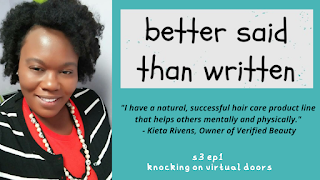
    Kieta Rivens: Knocking on Virtual Doors

    When the coronavirus pandemic forced nearly everyone to isolate, shelter in place, limit social gatherings, and work from home, the extra downtime gave many people time to think about what’s next for their lives, to think about that next opportunity, that next idea. 

    And people were definitely putting their thoughts into action. The Census Bureau reported that in 2020, more than 4 million new businesses were created in the United States - the highest the country has on record.  

    Before the pandemic, people would attend networking events and industry conferences to share their goals, ideals, and aspirations to find the perfect window of opportunity to take the giant leap. 

    By mid-March 2020, in-person networking came to a screeching halt. But that didn’t stop Kieta Rivens, founder of the natural hair care company, Verified Beauty. 

    In 2020, Essence magazine reported that Black consumers are switching from general products to those that specifically cater to them. As a result, the Black hair care industry in the United States pulled in nearly $2 billion in 2018. 

    Kieta, a mother, wife, and a full-time lead infant teacher in North Carolina launched her company amid the pandemic.

    In this episode, Kieta shares how she knocked on virtual doors to spread the word of her new business and the one affirmation that kept her going.

    You can find Kieta spreading the word about her business at the following:

    Website: https://verifiedbeautyllc.com/ 

    Instagram: @verifiedbeautyllc 

    Facebook: Verified Beauty LLC

    Customer Service: 704.840.2219